


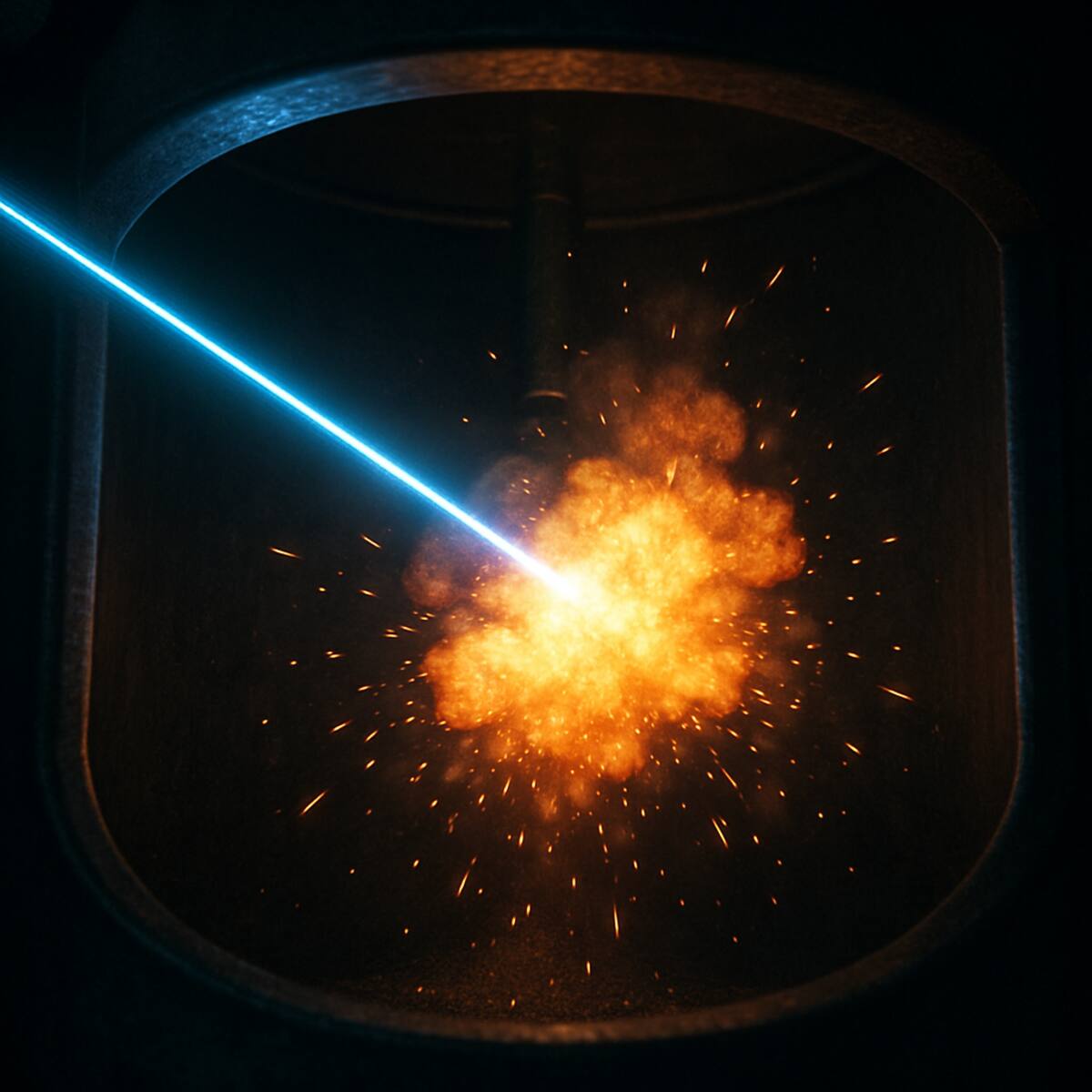
For well over a century, the internal combustion engine has been the undisputed workhorse of global industry. From powering massive electrical generators and heavy-duty marine vessels to propelling the aerospace and automotive sectors, the foundation of this technology has largely relied on a single, relatively unchanged component: the electrical spark plug. However, as the world pushes aggressively toward stricter emission regulations, higher thermal efficiency, and alternative fuels, traditional ignition systems are reaching their absolute physical limits. Find the best Laser igniter.
Enter the laser igniter.
By replacing electrical arcs with highly focused pulses of light, industries are unlocking unprecedented levels of combustion control. This transition from electrical to optical energy is not just a marginal upgrade; it is a fundamental reimagining of how we generate power. In this comprehensive article, we will explore the science, the engineering, and the profound industrial advantages of adopting laser-based ignition.
The Evolution of Ignition Systems
To understand why lasers are the next logical step, we must first look at the limitations of traditional spark plugs. Conventional ignition systems rely on a high-voltage electrical current jumping across a small physical gap between two metal electrodes. This spark ignites a localized pocket of the air-fuel mixture, creating a flame front that expands outward.
While this method has served us well, it inherently suffers from several distinct disadvantages in high-stress industrial environments:
- Electrode Wear: The intense heat and pressure of combustion cause the metal electrodes to degrade over time, leading to misfires and requiring frequent maintenance.
- Fixed Ignition Location: A spark plug can only ignite the mixture at the exact periphery of the combustion chamber where the electrodes sit, which is often the coolest part of the cylinder.
- Quenching Effects: The physical mass of the spark plug itself absorbs heat from the nascent flame kernel, a phenomenon known as “quenching,” which can extinguish the flame before it fully propagates.
As industries demand engines that run on leaner fuel mixtures and higher pressures to reduce emissions, these physical limitations have become major bottlenecks. The solution lies in precision ignition systems that completely remove physical electrodes from the combustion equation.
The Science Behind the Spark: How Laser Ignition Works
If you are wondering exactly how laser ignition works, the concept relies on the principles of high-energy optical physics rather than electrical conductivity. Instead of an electrical arc, these systems use a concentrated beam of laser light to generate a spark.
Plasma Generation via Light
The core mechanism is a fascinating physical process known as non-resonant breakdown. When a high-intensity laser beam is focused into a microscopic point inside the combustion chamber, the light energy becomes so intense that it literally rips electrons away from the gas molecules.
This process triggers the dielectric breakdown of air and fuel. In a fraction of a second, the gas at the focal point turns into a superheated plasma. This plasma generation via light creates a microscopic shockwave and a high-temperature thermal core that instantly ignites the surrounding fuel mixture.
The Hardware: Solid State Laser Technology
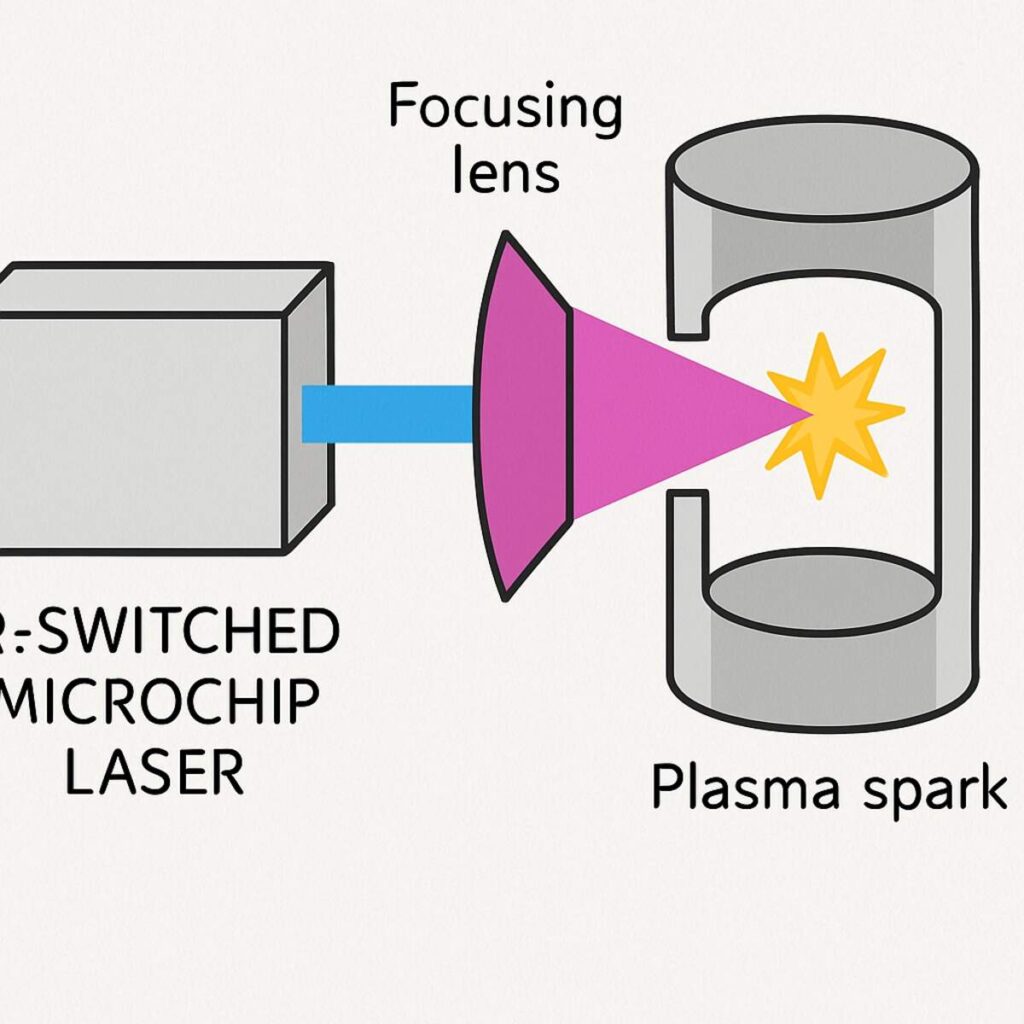
To achieve the immense peak power required to rip electrons from gas molecules, continuous lasers are not effective. Instead, modern systems utilize advanced solid state laser technology, specifically relying on a component known as a Q-switched microchip laser.
Here is why this hardware is critical:
- Q-Switching: This technique acts like an optical dam. It holds back the laser energy, allowing it to build up, and then releases it in incredibly short, intense bursts (typically measured in nanoseconds).
- Microchip Lasers: These are compact, rugged, and capable of surviving the intense vibrations and temperatures found in industrial engine environments.
- High Peak Power: While the average power of the system might be low, the peak power of that nanosecond pulse is in the megawatts—more than enough to generate combustion-inducing plasma.
Core Components of Modern Precision Ignition Systems
Transitioning an industrial engine from electrical sparks to laser beams requires specialized architecture. A typical industrial laser igniter setup consists of three primary components:
1. The Energy Source
The heart of the system is the pump laser, which provides the initial light energy. Depending on the scale of the engine and the demands of the application, power requirements can vary. For massive stationary power generators or heavy marine engines, engineers might utilize a robust 100 watt laser igniter setup to ensure continuous, fail-proof operation across multiple cylinders, ensuring the pump diodes have the necessary energy to feed the optical amplifiers.
2. The Optical Fiber Delivery System
Because lasers are sensitive instruments, you cannot always mount the primary electronics directly onto a violently vibrating engine block. Instead, the laser light is transported from a safe, vibration-isolated location to the engine cylinder using an optical fiber delivery system. These specialized fiber-optic cables are designed to transmit high-peak-power pulses without degrading the beam quality or burning the fiber material.
3. The Focusing Window (The “Optical Plug”)
At the engine cylinder, the fiber optic connects to a robust focusing lens. This unit looks somewhat similar to a traditional spark plug from the outside, but instead of metal electrodes, it features a highly durable optical window (usually made of sapphire). This lens focuses the incoming laser beam into a tight point deep inside the combustion chamber.
Actionable Tip for Plant Managers: When upgrading to precision ignition systems, ensure that your facility’s maintenance staff is trained in optical fiber handling. Unlike standard electrical wiring, optical fibers require strict bend-radius limits and absolute cleanliness at connection points.
Laser vs Spark Plug Efficiency: The Great Debate
When facility managers and mechanical engineers evaluate upgrades to heavy machinery, the decision usually comes down to efficiency, reliability, and return on investment. An honest look at laser vs spark plug efficiency reveals a striking contrast in performance, particularly in heavy-duty applications.
Energy Transfer and Flame Kernel Growth
With a standard spark plug, the electrical arc loses a significant amount of its energy to the surrounding metal electrodes (the quenching effect mentioned earlier). This means a large portion of the energy you put into the plug is wasted as heat transferred back into the engine block rather than into the fuel.
A laser igniter, conversely, has zero quenching effect. The plasma spark is created in free space, completely detached from any physical surface. 100% of the generated thermal energy goes directly into expanding the flame kernel. This results in faster, more stable, and more predictable combustion.
Ignition Location
Spark plugs are restricted to igniting the fuel at the cylinder wall. Lasers, however, can focus the beam deep into the center of the cylinder. Igniting the mixture in the center means the flame front has a shorter distance to travel to reach the cylinder walls, resulting in a faster, more complete burn.
Lifespan and Maintenance
- Spark Plugs: Even the highest-grade industrial spark plugs suffer from electrode erosion. In continuous-run natural gas generators, plugs may need to be replaced every 1,000 to 2,000 hours, leading to significant engine downtime.
- Laser Igniters: Because there are no electrodes to erode, an optical plug theoretically experiences zero wear from the spark itself. The optical windows can last tens of thousands of hours, drastically reducing maintenance intervals and operational costs.
The Ultimate Lean Burn Combustion Guide
To fully appreciate the value of a laser igniter, we must discuss “lean burn” technology. For engineers looking to optimize natural gas and heavy-duty engines, consider this section your essential lean burn combustion guide.
What is Lean Burn?
In an internal combustion engine, the air-to-fuel ratio dictates how the engine runs. A “stoichiometric” mixture has exactly enough air to burn all the fuel. A “lean” mixture has significantly more air than is theoretically needed.
Why Lean Burn is Desirable
Running an engine lean offers two massive benefits:
- Lower Temperatures: The excess air absorbs heat, lowering the peak combustion temperature. Since Nitrogen Oxides (NOx)—a major, heavily regulated pollutant—only form at extremely high temperatures, lean burn drastically reduces NOx emissions.
- Higher Efficiency: Lower temperatures mean less heat is lost to the engine walls, allowing more energy to be converted into useful mechanical work.
The Problem with Spark Plugs in Lean Mixtures
Lean mixtures are notoriously difficult to ignite. Because the fuel molecules are spread far apart by the excess air, a standard electrical spark often fails to catch, resulting in a misfire. To compensate, spark plugs must be driven with massive amounts of electrical energy, which destroys the electrodes in a matter of days.
The Laser Solution
This is where the laser igniter shines. Because the laser creates a much hotter, more energetic plasma core without any quenching effect, it can easily ignite ultra-lean mixtures that would cause a traditional spark plug to misfire. This capability is the single greatest driver for the adoption of laser technology in industrial gas engines today.
Environmental and Economic Benefits
The shift toward optical ignition is not just an engineering flex; it is driven by hard economics and strict environmental regulations.
Reducing Engine Emissions with Lasers
As global environmental agencies tighten restrictions on industrial emissions, stationary power plants and marine vessels face massive fines if they cannot clean up their exhaust. Reducing engine emissions with lasers is achieved primarily through the facilitation of the ultra-lean burn mixtures discussed above. By lowering combustion temperatures and ensuring a complete burn of the fuel, engines can drastically reduce their output of NOx, Carbon Monoxide (CO), and unburned hydrocarbons.
Improving Fuel Efficiency with Optics
Fuel is the highest ongoing operational cost for any industrial engine application. Improving fuel efficiency with optics works on multiple fronts:
- Faster Combustion: Igniting the fuel in the center of the cylinder speeds up combustion, translating to higher thermal efficiency.
- Fewer Misfires: Every misfire is unburned fuel literally blown out the exhaust pipe. Precision ignition systems guarantee a near 100% ignition probability.
- Optimal Timing: Optical systems allow for nanosecond-perfect ignition timing, dynamically adjusting to engine loads and fuel qualities in real-time.
For a power plant running multiple multi-megawatt natural gas engines 24/7, even a 2% increase in fuel efficiency translates to hundreds of thousands of dollars saved annually.
Multipoint Ignition Advantages: The Holy Grail of Combustion
One of the most exciting capabilities unique to laser systems is multipoint ignition.
With a traditional spark plug, you get one spark at one location. If you want two sparks, you have to drill a second hole in the engine cylinder and install a second spark plug—a complex and structurally weakening modification.
With a laser, you simply pass the beam through a specialized diffractive optical element (a type of split lens) right before it enters the cylinder. This single beam can be split into two, three, or even five separate beams, each creating its own plasma spark at different locations simultaneously inside the cylinder.
Exploring the Multipoint Ignition Advantages
- Ultra-Fast Flame Propagation: By igniting the fuel mixture in multiple places at once, the total time required to burn all the fuel is drastically reduced.
- Knock Prevention: Engine “knock” (premature detonation) occurs when unburned fuel spontaneously ignites due to pressure before the main flame front reaches it. Multipoint ignition burns the fuel so quickly that knock does not have time to occur.
- Handling Exotic Fuels: Hard-to-burn fuels, such as biogas or low-grade syngas, benefit immensely from multiple simultaneous ignition sources, ensuring complete combustion of varied fuel qualities.
Real-World Industrial Applications
While the technology sounds like science fiction, it is already being deployed in high-stakes environments today.
Heavy-Duty Stationary Power Generation
Large natural gas engines used for municipal power generation or backup data center power are the primary early adopters. These engines run continuously for months at a time. The elimination of spark plug maintenance downtime and the ability to run leaner, greener mixtures offer an immediate return on investment.
Aerospace and Rocket Propulsion
In aerospace, reliability is non-negotiable. Laser based engine startup is currently being utilized and researched for rocket engines and high-altitude aircraft turbines. In the freezing vacuum of space or the thin air of the upper atmosphere, traditional chemical or electrical igniters can fail. A laser, however, can reliably generate a plasma spark under extreme pressure and temperature variations, making it ideal for relighting jet engines at high altitudes or initiating rocket propulsion precisely on cue.
Marine Propulsion
Large cargo ships are facing immense pressure to decarbonize. As marine engines transition from dirty bunker fuel to cleaner alternatives like Liquefied Natural Gas (LNG), methanol, or ammonia, laser igniters are providing the robust ignition source needed to efficiently burn these new marine fuels.
Actionable Tip for Fleet Operators: If your operation is transitioning to alternative fuels like hydrogen or ammonia, factor the cost of optical ignition systems into your engine retrofitting budget. Traditional plugs will struggle to ignite these fuels efficiently without suffering severe thermal degradation.
Overcoming Technical Challenges: The Obstacles to Optical Ignition
Despite the overwhelming advantages, replacing a hundred-year-old technology does not come without hurdles. Engineers have had to solve several complex problems to make laser ignition viable for commercial industry.
The Primary Challenge: Preventing Window Fouling in Optics
The biggest technical barrier to reliable laser ignition is the optical window that interfaces with the combustion chamber. An engine cylinder is a dirty place, filled with soot, unburned oil, and combustion byproducts. If this soot deposits on the sapphire lens, it blocks the laser beam. The beam will then heat the soot, potentially melting or cracking the expensive lens.
Therefore, preventing window fouling in optics is paramount. Engineers have devised several ingenious solutions to this problem:
- Aerodynamic Purging: Designing the housing so that the intake air creates a miniature vortex or “air curtain” across the face of the lens, constantly sweeping soot away before it can settle.
- High-Energy Self-Cleaning: Operating the laser at an energy level slightly higher than needed for ignition. The peripheral energy of the beam literally vaporizes and blasts away any microscopic soot particles that attempt to cling to the window.
- Advanced Coatings: Applying nanometer-thick oleophobic and hydrophobic coatings to the sapphire, making it physically difficult for carbon molecules to adhere to the surface.
Thermal Management
Engines get incredibly hot, and lasers generally prefer to be cool. The solid state laser technology and the optical fiber delivery system must be heavily insulated or actively cooled to prevent thermal degradation of the optical properties. Advanced water-cooling jackets around the optical plug are often required in high-performance applications.
Initial Cost
Currently, a multi-cylinder precision ignition system costs significantly more upfront than a box of conventional spark plugs and ignition coils. However, when factored over a 5-year lifecycle of a continuous-run industrial generator, the fuel savings and eliminated downtime quickly offset the initial capital expenditure.
The Future of Internal Combustion
As the automotive world races toward battery electric vehicles, many have prematurely declared the death of the combustion engine. However, for heavy industry, aviation, marine shipping, and global power generation, batteries simply do not have the energy density required. The internal combustion engine isn’t dying; it is evolving.
The future of internal combustion relies heavily on sustainable, zero-carbon fuels.
The Hydrogen Engine Era
Hydrogen combustion engines are viewed as a massive part of our green energy future. However, hydrogen burns incredibly hot and fast. A traditional spark plug acts as a “hot spot” in a hydrogen engine, often causing the highly reactive fuel to pre-ignite (backfire) before the valves are even closed.
Because a laser igniter has no protruding metal electrodes to get hot, it eliminates the hot-spot issue entirely. Furthermore, lasers can easily ignite the ultra-lean hydrogen mixtures required to keep combustion temperatures low enough to prevent NOx formation.
Ammonia and Synthetic Fuels
Ammonia is gaining traction as a carbon-free carrier fuel for marine shipping. Unlike hydrogen, ammonia is incredibly difficult to ignite. It requires massive ignition energy. The high peak power of a Q-switched microchip laser provides exactly the concentrated blast of plasma needed to force ammonia to burn efficiently.
As industries transition to these diverse and challenging alternative fuels, precision optical ignition will no longer be an optional upgrade—it will be a fundamental requirement.
Summary and Key Takeaways
The transition from the electrical spark plug to the laser igniter represents one of the most significant leaps forward in combustion technology in a century. By harnessing the power of optics and quantum physics, industries can push engines harder, cleaner, and more efficiently than ever before.
Here is a summary of the core advantages covered in this guide:
- Unmatched Efficiency: Moving away from physical electrodes eliminates the quenching effect, directing 100% of the ignition energy into the fuel via plasma generation via light.
- Enabling Lean Burn: Lasers are the ultimate key to unlocking ultra-lean fuel mixtures, paving the way for drastic reductions in harmful NOx and CO2 emissions.
- Zero Electrode Wear: By utilizing advanced solid state laser technology, engineers bypass the physical wear and tear of spark plugs, saving hundreds of hours in maintenance downtime.
- Advanced Combustion Dynamics: The ability to implement multipoint ignition advantages allows for faster flame propagation, higher thermal efficiency, and the elimination of engine knock.
- Future-Proofing: Whether dealing with laser based engine startup in aerospace or burning zero-carbon hydrogen in a power plant, optical ignition handles the extremes that electrical sparks cannot.
While challenges like preventing window fouling in optics remain critical engineering considerations, the rapid advancement of materials science and laser cost-reduction is making optical ignition increasingly accessible.
For engineers, plant managers, and industrial operators looking to optimize their machinery for the stringent demands of tomorrow, the writing is on the wall. The future is bright, and it is powered by light. By investing in and understanding these precision systems today, industries can secure their operational efficiency and environmental compliance for decades to come.
