


Have you ever nodded along while a friend or family member talked about a “raid” with their “guild”? If gaming terms sound like a foreign language, this guide is your simple, friendly translator. Let’s start with the most fundamental piece of the puzzle: the “online” part of these massive games. Check out UFAMAX24 to know more
Think of the difference between playing a board game by yourself and playing it with friends over a video call. Many traditional video games are self-contained, but modern online games require an internet connection for a crucial reason. This connection isn’t just for show; it’s the bridge that takes you from your living room into a shared digital world.
That bridge connects your device to the game’s central computer—a powerful machine hosting a world for everyone. This is the foundation of how MMO games work: your internet link allows you to join thousands of others in the same space, at the same time. This is what transforms a standard game into one of the massive multiplayer games we hear so much about.
How “Multiplayer” Goes Beyond Playing With a Few Friends
Chances are, you’re already familiar with online multiplayer games. You might have played a card game with a cousin across the country or raced cars online with a few friends. Think of this like a private party; you and a small, invited group share a space for a specific activity. Once the game is over, the party disbands and the space disappears.
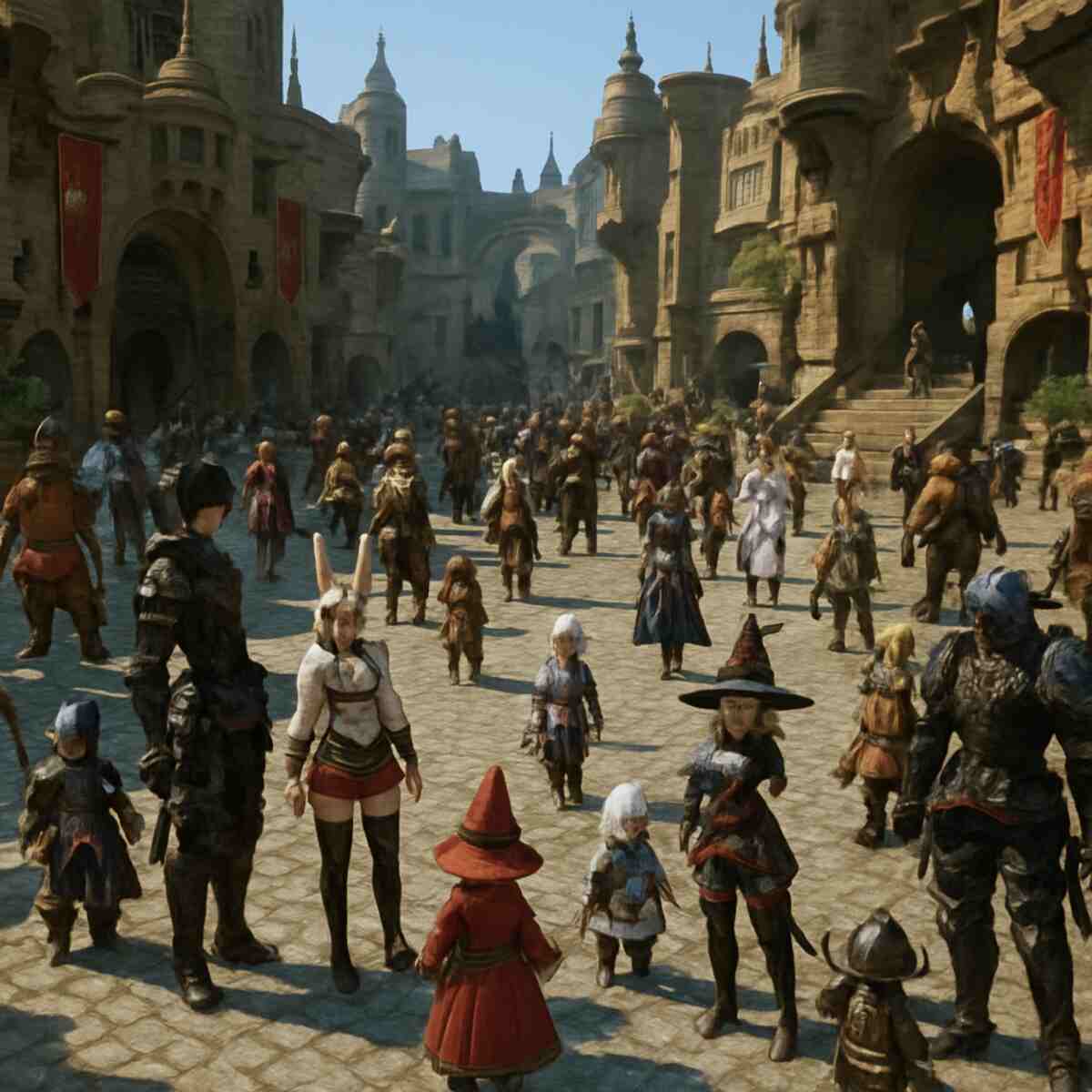
MMO gaming, however, takes this idea and turns it into a bustling public square. Instead of a private room with friends, you step into a shared world that’s already filled with hundreds or thousands of other players. You don’t need to invite these people; they are simply there, living their own adventures alongside you, much like strangers you might pass in a city park.
This creates a dynamic environment where everyone’s actions happen simultaneously in public view. You might see one group of players working together to build something, while another group simply chats in a virtual tavern. Everyone is a part of the same living world at the same time. But it’s not just the shared space that’s different—it’s the incredible scale of it all.
What Makes an MMO “Massively” Different?
The word “massively” isn’t just a dramatic flair—it points to the incredible scale that separates these games from everything else. While a typical online game might host a dozen players for a single match, a Massively Multiplayer Online game connects thousands of people into one shared, unbroken world. This isn’t just a bigger waiting room before a game starts; it’s a digital city bustling with real people.
To make this possible, the game company runs powerful computers called “servers.” Think of a server as a dedicated, running copy of the game world that can host several thousand players at a time. When you log in, you join one of these worlds. Everyone else connected to that same server can see you, interact with you, and share the exact same environment in real-time, whether you’re exploring a forest or walking through a crowded capital.
This huge population is what breathes life into the game. Towns feel like actual towns because they’re filled with people chatting, trading, and forming groups. You might be on a personal mission and stumble across a large player-run event, or simply watch the world go by from a busy tavern. It creates the feeling of being part of a living, digital society. But the world doesn’t just feel alive because of the people in it; it’s also because the world itself never stops.
What Is a “Persistent World” and Why Does It Matter?
That final idea—that the world itself never stops—is what makes MMOs feel so different from other games. Think about a neighborhood park. Even after you go home for the day, other people are still there, the sun continues to set, and life moves on without you. This is the core concept behind what developers call a “persistent world.”
Unlike a typical video game that effectively pauses when you turn it off, an MMO’s world keeps running 24/7 on its servers. When you log off, the in-game clock keeps ticking, other players continue their adventures, and the digital world evolves. There is no pause button for the entire world, only your participation in it.
This continuity creates a genuine sense of history and place. When you log back in, the world won’t be exactly as you left it. A player-run festival might have started in the main city, or you might hear people talking about a major event that a group of players accomplished overnight. Your actions, too, can leave a lasting mark for others to see, making you a part of that shared history.
Because the world lives and breathes with or without you, it starts to feel less like a temporary game and more like a real place you visit. This is why these games can become such engaging hobbies, acting as a “second place” for communities to grow. But to step into this ever-changing world, you first need a digital stand-in for yourself.
What Is an Avatar and How Do You Create One?
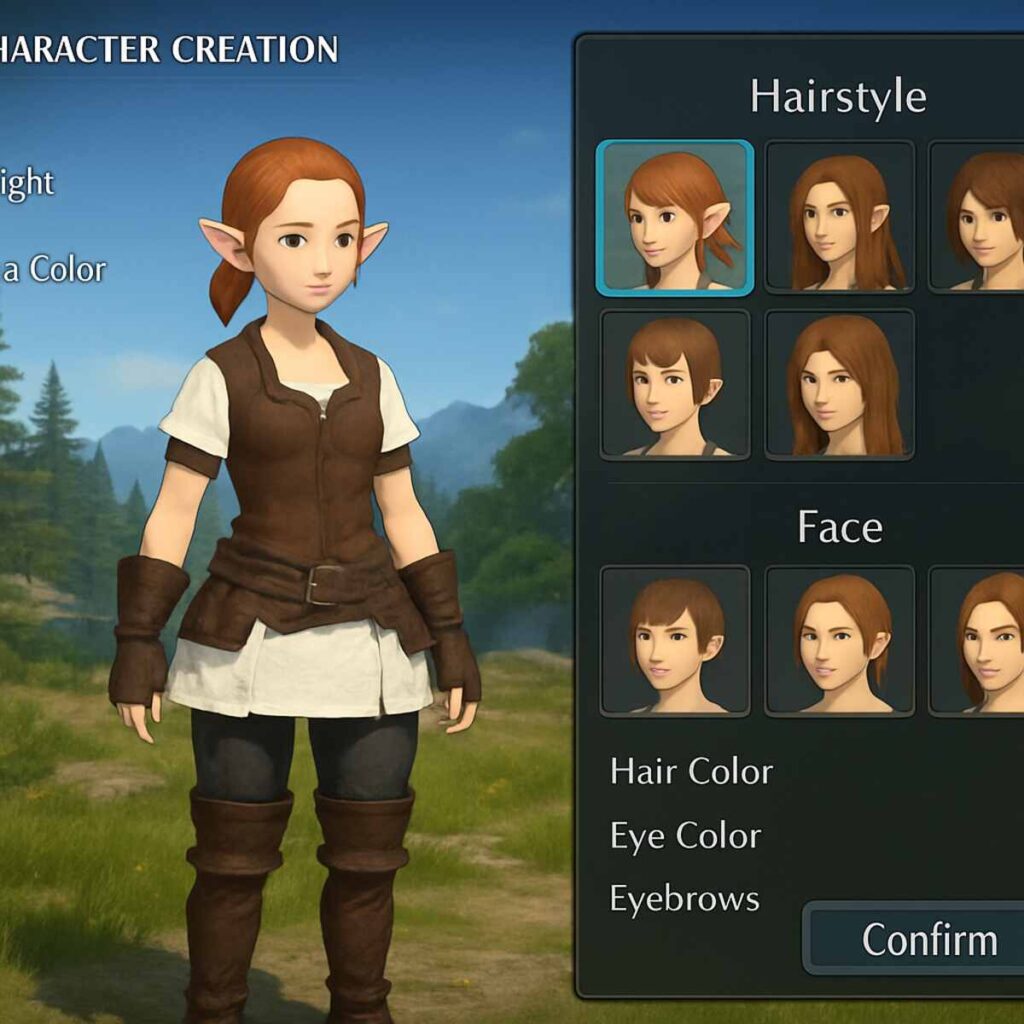
That digital stand-in is called an “avatar.” It’s your character inside the game—the digital person you control to walk, talk, and interact with everything around you. Think of it as your personal game piece on a giant, interactive board. Through your avatar’s eyes, you explore the world, and to everyone else playing, your avatar is you. This is the core of how you exist and are seen within all MMO games.
Creating this avatar is often the very first thing you do. Before you even step into the world, the game presents you with a creation screen where you can make key decisions. You get to choose everything from your character’s hairstyle and facial features to their height and build, much like setting up a profile on a social media site, but far more detailed. This process is a fun and important part of the experience, allowing you to craft a digital self that feels unique.
With your character created, you are now ready to step into the world. You might spend your first few moments just walking around, taking in the sights and seeing the avatars of other players. But with an entire world at your feet, you’ll likely wonder, “What should I do now?” To solve this, most games give your character a sense of purpose through guided activities called “quests.”
What Are “Quests” and How Do They Guide You?
Think of a quest as a specific task on a to-do list for your avatar. It’s the game’s way of answering the question, “What’s next?” A quest might involve delivering a message to a faraway town or finding a lost item in a mysterious forest. Instead of leaving you to wander aimlessly in a vast digital landscape, these guided activities provide a clear sense of direction and purpose, helping you get started on your adventure.
These tasks come from the world’s inhabitants—characters that aren’t controlled by other players. They are called Non-Player Characters, or NPCs for short. Think of them as a movie’s supporting cast; they exist to move the story forward and make the world feel alive. You can often spot an NPC with a quest to offer by a noticeable symbol, like a glowing exclamation mark, floating above their head.
Following a chain of quests does more than just check off tasks. You uncover the game’s story, explore new regions, and earn rewards that help your avatar progress. While many quests can be done alone, some are designed to encourage teamwork with other players. This focus on cooperation is a key part of what makes these online worlds so social, and it naturally leads players to form organized groups or clubs, often called “guilds.”
How Do Players Form Communities Like “Guilds”?
While you can meet other players by chance during your adventures, many people want a more consistent community. This is where player-run organizations—often called a “guild,” “clan,” or “free company”—come into play. Think of a guild like an official club or sports team inside the game. It’s a group of players who have formally banded together under a shared name and banner to socialize, help each other, and tackle challenges as a team.
Joining a guild is like having a home base. It gives members access to a private chat channel, so there’s always a friendly group to talk with. Need help with a difficult quest, want to trade for a rare item, or just celebrate a recent accomplishment? Your guildmates are your go-to support system. This transforms the game from a solo activity into a deeply collaborative and social experience, making the massive world feel much more personal and manageable.
These communities are the heart of many popular MMOs, like World of Warcraft and Final Fantasy XIV. They are a huge reason why people play the same game for years; the adventures are exciting, but the friendships are what create lasting memories. These organized groups also become major players in another fascinating aspect of these digital societies: their fully functional virtual economies.
What Is a Virtual Economy in an MMO?
All of this player activity—completing quests, forming guilds, and trading items—fuels something remarkable: a virtual economy. Just like a real-world society, these game worlds have their own forms of money (often called “gold” or “credits”) and a marketplace where goods are exchanged. This isn’t a system run by the game developers; it’s a living, breathing economy created and sustained by the players themselves.
The value of an item, whether it’s a powerful sword or a simple health potion, comes directly from the time and skill players invest to obtain it. To get the necessary ingredients, a player might need to spend time exploring a dangerous area or repeatedly gathering a specific resource. This effort is what makes an item scarce and, therefore, valuable to other players who may not have the time or ability to get it themselves.
This system naturally encourages players to specialize, much like in a real town. Some players become “gatherers,” focusing on collecting raw materials like ore from a mountain or rare herbs from a forest. Others take on the role of “crafters,” who buy those materials and use in-game skills to turn them into useful products, like armor for a warrior or furniture for a player’s house.
These different roles create a dynamic of supply and demand. Gatherers sell materials to crafters, who then sell their finished goods to adventurers who need them. This forms a complete economic loop driven entirely by the community’s needs and efforts. These deep social and economic systems are a hallmark of a particularly popular category of MMO, which adds a heavy dose of storytelling and character progression to the mix.
What’s the Difference Between an MMO and an MMORPG?
That popular category we just mentioned is the one you’ll encounter most often: the MMORPG, which stands for Massively Multiplayer Online Role-Playing Game. Think of “MMO” as a broad category, like “vehicle,” while “MMORPG” is a specific and very popular type, like “car.” The extra “RP” signifies a focus on “role-playing,” which means you don’t just exist in the world—you take on a specific character role with a unique purpose and skillset.
This “role” is often defined by a character class you choose when you begin, which is like picking a profession for your avatar. A character’s class determines their special abilities during adventures. For example, a “Warrior” class might be an expert with a sword and shield, specializing in protecting their teammates. In contrast, a “Mage” class would use powerful spells from a distance. Each class has distinct strengths and weaknesses, encouraging players to work together to overcome challenges they couldn’t face alone.
Because this structure adds so much depth and encourages teamwork, the vast majority of the most famous MMOs, including titles like World of Warcraft and Final Fantasy XIV, are actually MMORPGs. The focus on classes like Warriors and Mages might make it seem like these games are all about swords and sorcery, but is that always the case?
Are All MMO Games About Swords and Sorcery?
While fantasy worlds are incredibly popular, the “MMO” concept is more of a blueprint than a specific theme. It’s helpful to think of it like movie genres; you can have a comedy, a thriller, or a historical drama that all follow the same basic principles of filmmaking. In the same way, an MMO can be set anywhere imaginable, from the distant past to a far-flung future.
For instance, instead of wielding a sword, you might pilot a starship through a vast galaxy, engaging in trade and exploration with other players in a science-fiction game like EVE Online. Other games let you create your very own superhero to fight crime (or cause it) alongside famous comic book characters in a world like DC Universe Online. There are even MMOs set in modern-day or historical environments.
The setting is just the window dressing. Whether it’s a fantasy kingdom or a futuristic city, the core experience remains the same: sharing a persistent, online world with thousands of other people. But with worlds this big and complex, it raises a practical question: how do you get access, and what does it cost to play?
How Do You Pay for These Games?
Given that these massive digital worlds are always running and constantly being updated, a common question arises: how do developers keep the lights on? While some people ask are MMO games free to play, the answer isn’t a simple yes or no. The way players pay for access varies, and most games fall into one of three main categories.
Understanding the payment structure is often the first step in figuring out how to choose an MMO to play. The three main MMO subscription models are easy to remember using everyday analogies:
- Monthly Subscription: This works just like a Netflix or gym membership. You pay a recurring fee for unlimited access to the entire game.
- Buy-to-Play: Think of this like buying a book or a board game. You pay once for the game itself and can play it as much as you want without any recurring fees.
- Free-to-Play (F2P): This is like downloading a free app on your phone. You can enter the world and play for free, but the game is supported by optional in-app purchases.
That “Free-to-Play” model can sometimes feel like it has a catch. These games make money by selling things that don’t give an unfair advantage, like cosmetic items to change your character’s outfit or home decor. Other times, they might offer convenience items, like ways to speed up travel or gain experience faster, for players who have less time to play.
Regardless of the model, every player wants to make progress and grow their character’s power or influence. This brings up another common term you might hear from players: “the grind.” So, what exactly do people mean when they talk about grinding in a game?
What Do People Mean by “Grinding” in a Game?
Think about practicing scales on a piano to master a new song, or knitting row after row to eventually finish a scarf. In the world of online games, this concept is called “grinding.” The grinding in video games meaning refers to performing simple, repetitive tasks—like defeating the same type of easy monster or collecting a specific resource—to slowly build toward a larger goal. It’s a core part of how MMO games work for many players.
The most common reason for this is to gain “Experience Points,” often shortened to XP. You can think of XP as progress points that make your character stronger over time. By repeating an action, players accumulate enough XP to reach a new level, earn virtual money for better equipment, or get that one rare item that only appears after many attempts. It’s a direct, if sometimes slow, path to making progress.
While this might sound like a chore, many players find grinding to be a surprisingly relaxing, low-stress way to play while chatting with friends online. This a key piece of understanding MMO slang and terminology from a player’s perspective. Still, the idea that a popular form of entertainment involves what sounds like digital chores raises a bigger question about their long-term appeal. Are MMO games “dying,” or are they just changing?
Are MMO Games “Dying” or Just Changing?
It’s a question that comes up often in online discussions: are mmo games dying? After learning that they can involve repetitive “grinding,” it’s easy to assume people might be losing interest. While the flood of new online worlds from the 2000s has certainly slowed down, this isn’t a sign of collapse. Instead, it signals that the market has matured. Think of it like the early days of social media, when countless new sites competed for attention. Over time, the landscape settled around a few major platforms, and the same has happened with these games.
In fact, some of the most popular examples of popular mmo games have shown incredible staying power. Titles like World of Warcraft (launched in 2004) and Final Fantasy XIV are more like ongoing services than one-time products. This evolution is a key chapter in the history of online multiplayer games. Developers constantly add new stories and activities, much like a TV series releasing a new season. This keeps the experience fresh and gives millions of players a reason to stay logged in for years, not just weeks.
The perception of decline comes from this change in the industry, not a lack of players. The market hasn’t vanished; it has simply concentrated. The biggest online worlds are more populated and stable than ever, functioning as sprawling digital societies. Instead of asking if they’re dying, the more interesting question is what makes these persistent worlds so compelling that people choose to call them home.
Why Do People Dedicate So Much Time to These Worlds?
The simple answer to why people play MMO games is that they fulfill basic human needs in a unique way. Beyond the goals set by the game itself, players are driven by their own internal motivations: the satisfaction of mastering a new skill, the thrill of discovering a hidden valley, or simply the comfort of escaping into another world for a while. These digital realms provide a structured place for achievement and exploration that can sometimes be hard to find in our daily routines.
For many, the most powerful draw is the community. Sociologists talk about the importance of a “third place”—a spot outside of home and work where people can gather and socialize. For millions, an MMO serves precisely this role. A player guild isn’t just a team for tackling challenges; it’s a social club. The guild’s shared chat becomes the neighborhood hangout, and the virtual city square becomes a place to meet friends, much like a real-world coffee shop.
These strong social aspects of MMO gaming often translate into genuine, lasting friendships. It’s not uncommon for players in a guild to celebrate each other’s real-life birthdays, offer support during tough times, or organize meetups in the physical world. The game becomes the backdrop for relationships that are as real as any other, built on shared experiences and mutual support.
These sprawling online worlds are less about winning and more about belonging. They offer a unique blend of personal growth and shared community that keeps people invested for years. This powerful combination of technology and human connection didn’t appear overnight, however. To understand its appeal fully, it helps to look at how we got here.
How Did We Get Here? A Brief History of MMOs
The journey to today’s vibrant, graphical worlds began long before most people had fast internet. The earliest ancestors of modern MMO games were text-based adventures from the 1970s and 80s called MUDs (Multi-User Dungeons). Imagine reading a fantasy novel, but you could type commands to interact with the story—and do so alongside hundreds of other readers in the same shared narrative. These text-only worlds were the first to prove that strangers online could cooperate, compete, and build communities together.
A massive shift occurred in the late 1990s when graphics entered the picture. Pioneering titles like Ultima Online (1997) and EverQuest (1998) took the core social ideas of MUDs and gave them a face. For the first time, players could see their characters, explore a visual world, and fight colorful monsters together. These games established the blueprint for MMORPG games as we know them, creating the persistent, 24/7 online fantasy settings that are now standard.
While these early successes built a dedicated following, it was a game released in 2004 that turned the genre into a global cultural force: World of Warcraft. By refining the formula and making it more accessible and polished than ever before, it attracted millions of players who had never considered an online game. Its immense popularity cemented the history of online multiplayer games in pop culture and set the stage for the diverse online worlds that exist today.
You Now Understand the World of MMOs
Before, terms like “guild” or “raid” might have sounded like a foreign language, part of a world you couldn’t access. Now, you possess the key to understanding a massive part of modern digital culture. You’re equipped to look past the screen and recognize the intricate, living societies that millions of people call their second home.
You now understand what MMO games are at their core: a personal avatar moving through a persistent world—like a digital city that never sleeps—which is shared with thousands, or even millions, of other real people at the same time. This simple but powerful framework is the foundation for everything that makes these experiences so compelling.
Your first step with this new knowledge isn’t to play, but simply to listen. The next time you overhear a conversation about an online game, listen for the concepts you now recognize. When you hear about a group’s shared goal or a friend’s latest adventure, you’ll see the social aspects of MMO gaming in action and find that you can follow along.
These worlds are less like simple board games and more like sprawling digital societies. The next time you hear about a guild, a quest, or a raid, you’ll no longer be on the outside looking in. You’ll understand that it’s about more than just a game—it’s about community, collaboration, and a shared digital life.
