
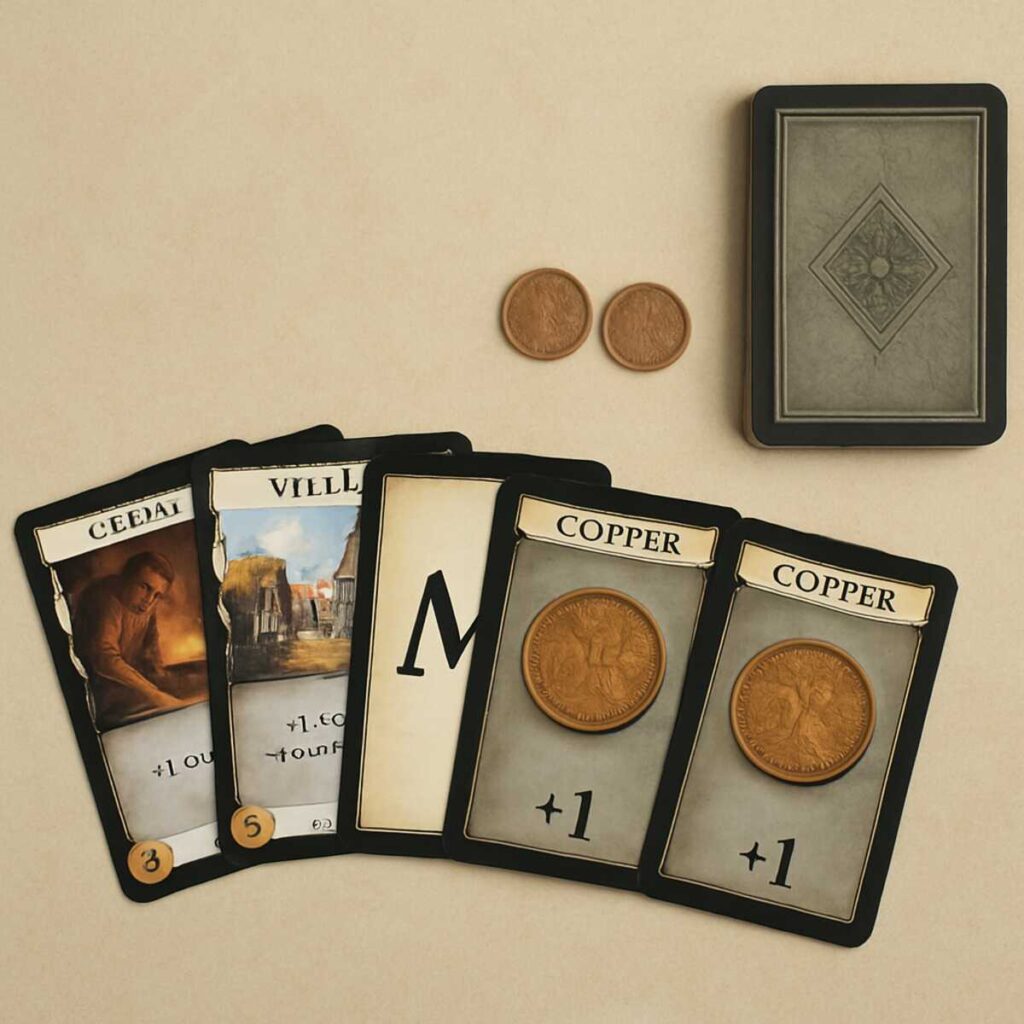
Looking for a new card game for your next get-together? You want something more interesting than Uno but don’t want to spend the first hour deciphering a 30-page rulebook. Meet Monarchy, a fast-paced game where you can build a kingdom, tax your friends, and create a royal dynasty—all of which you can learn in less than ten minutes. Check out UFAZEED to know more
At its heart, the Monarchy card game is about building the most prestigious royal family. Your goal is to collect sets of characters like Dukes, Queens, and Knights to earn points, using clever card plays to expand your influence and fill your treasury with gold. Because the game is designed to be taught in minutes, most new players grasp the entire ruleset before the first hand is even dealt, making it a fantastic choice for family nights or introducing friends to a game that offers fun choices without being overwhelming.
This guide covers everything from setup to your final score, starting with the basic turn structure and card functions, then moving on to simple strategies that will have you ruling your first game. You’ll have all the knowledge you need to build your own legacy.
What’s the Goal? How You Actually Win the Monarchy Card Game
The objective of the Monarchy game isn’t about eliminating other players, but about building the most impressive legacy. You win by finishing the game with the most Victory Points. Think of them like points in a classic card game; every character you add to your kingdom is part of a plan to have the highest score when the deck runs out.
The primary way to score is by collecting sets of identical Character cards. For example, having a set of three “Farmer” cards in your kingdom is good, but having four is even better. This “set collection” mechanic is the core of how to win Monarchy. Much like collecting all the properties of one color in Monopoly, building these character sets is your main path to victory.
While collecting sets is crucial, there’s one special card that can change everything: the Crown. Simply holding this card at the end of the game gives you a significant point bonus, often deciding who wins. This makes the Crown a constant target, adding a fun layer of “king of the hill” to the game as you try to secure it for the final scoring round.
Your 5-Minute Setup: How to Start a Game of Monarchy
One of the best things about Monarchy is how quickly you can get a game to the table. The setup is the same for two, three, or four players, taking just a couple of minutes.
Follow these four simple steps, and you’ll be ready to build your dynasty:
- Deal the Cards: Shuffle the main deck and deal a starting hand of 5 cards to each player. Keep these secret from your opponents!
- Fund the Treasury: Give each person 2 Coins to start their royal treasury.
- Create the Market: Place the rest of the deck facedown. Flip the top three cards over in a row beside it. This lineup is called the Market—a public shop of cards available to everyone.
- Determine the First Player: The player who most recently visited a museum or historical site goes first! If that doesn’t work, the youngest player begins the game.
And that’s it! Every player now has a hand of cards to play and some coins to spend. With the starting player chosen, you’re ready to learn what to do on your turn.
Your Turn in 30 Seconds: The Two Simple Choices You Make
A turn in Monarchy is refreshingly straightforward, boiling down to a simple, two-step rhythm. On every turn, you will first collect resources and then perform one main action. This structure keeps the game moving quickly, ensuring you’re never waiting long for your chance to expand your dynasty.
For the first part of your turn, you must make a choice to build your resources. You can either take 1 Coin from the bank to add to your treasury or draw the top two cards from the deck. You can only pick one, so consider if you need money more than you need new schemes.
After you’ve taken your income, you get to make your move. This is your Action for the turn, where you’ll typically play one card from your hand. This single card play is how you recruit new family members, construct buildings, and even interfere with your rivals’ plans. These cards form your own personal kingdom right on the table in front of you.
What is a ‘Tableau’? Building Your Personal Kingdom of Cards
So, you play a card from your hand… but where does it go? Unlike games where you have one shared board, the cards you play in Monarchy build your own personal kingdom right in front of you. In the world of board games, this display is called a tableau. Think of it as your public royal court, laid out for all to see. In a good tableau card game, what you see in front of each player is their score and their power.
The cards in your hand are your secret plans, but the cards in your tableau are your accomplishments. The characters and buildings you place here are what score you points at the end of the game, and many of them grant you special powers that you can use on future turns. The bigger and better your tableau, the more formidable your kingdom becomes.
As you build this line of cards, you’re not just collecting points; you’re showcasing your strategy. Are you building a wealthy trade empire with merchants, or a mighty military with knights? Your tableau tells your story, built from the different types of cards you’ll use to create your legacy.
Meet Your Royal Court: The 3 Types of Cards in Monarchy
Your tableau is your kingdom, and every kingdom needs its people, events, and defenses. Every card you’ll draw falls into one of three distinct types, each with a clear job to do.
Understanding these cards is the key to victory. At a glance, here’s what you’ll be working with:
- Character Cards: These are the nobles and citizens who populate your kingdom. You play them into your tableau, where they stay for the rest of the game to score you points.
- Action Cards: Think of these as major events, like a royal tax or a surprise festival. You play them for a powerful, one-time effect, and then they go to the discard pile.
- Defense Cards: These are your royal guards and castle walls. You use these cards to block another player’s action against you, keeping your tableau and treasury safe.
The most important distinction is that Character cards are permanent additions, while Action and Defense cards are temporary. Characters build your legacy over time; Actions give you a boost right now.
Knowing the different roles and abilities is crucial for planning your turn. While Character cards are your main path to scoring points, it’s the clever use of Action cards that often decides the winner. In fact, some of the most powerful actions are the ones you use against your rivals.
It’s Good to Be King: How to Tax and Attack Other Players
Building your own perfect kingdom is satisfying, but some of the most memorable moments in Monarchy happen when you decide to meddle in someone else’s. While Character cards build your score, Action cards let you interact directly with your opponents. This is where you can slow down a leader, grab some extra cash, and really stir the pot.
The most common way to do this is by taxing your rivals. For example, when you play a “Tax Collector” from your hand, its effect happens immediately: every other player must give you one coin from their personal supply. This move boosts your treasury while draining everyone else’s, making it harder for them to afford powerful new cards.
For those moments when you need to be more aggressive, you can launch a direct attack. Playing an “Assassin” card, for instance, allows you to target one opponent and force them to discard a Character card from their tableau. Using this advanced tactic can instantly knock someone out of the lead, making it a powerful tool for controlling the game.
These interactive cards are what keep the game balanced and exciting. They prevent any single player from running away with an early lead and ensure that everyone stays invested until the very end. But what happens when an Assassin is coming for one of your own precious nobles? Don’t worry—your kingdom is not entirely defenseless.
How to Protect Your Kingdom From Vicious Attacks
Facing an aggressive opponent doesn’t mean your kingdom has to crumble. For every attack, there’s a defense. If another player targets one of your valuable characters with an “Assassin” card, you can instantly play a “Guard” card directly from your hand. This action, played out of turn, completely cancels their attack, keeping your character safe and swinging the game’s momentum back in your favor.
Defense isn’t just for blocking direct attacks. What about those pesky tax collectors trying to drain your treasury? This is where the “Moat” card comes in. Like the Guard, you can play the Moat from your hand when someone tries to tax you. It acts as a personal shield, protecting your coins while everyone else has to pay up. Understanding these counters is a satisfying way to thwart a rival’s plan.
This creates a fantastic strategic puzzle. Holding a defensive card in your hand means you have one less card to play on your own turn for points or resources. This trade-off is central to a winning strategy: do you go all-in on building your kingdom, or do you keep an ace up your sleeve for protection? A well-timed block is often more valuable than scoring a few extra points.
Cashing In: How to Score Points and End the Game
Ultimately, building a grand kingdom in your tableau is all about one thing: points. The main objective is to have the highest score when the final card is played. You earn these points by collecting sets of identical character cards. A lone “Knight” is good, but three Knights together form a powerful, point-scoring unit.
This focus on grouping identical cards is a classic “set collection” mechanic, and if you’ve ever played a game like Rummy, you’ll feel right at home. At the end of the game, you’ll score points for each set you’ve collected in your tableau. The bigger the set, the more it’s worth:
- Set of 3 identical characters = 3 points
- Set of 4 identical characters = 6 points
- Set of 5 or more identical characters = 10 points
So, when does the game actually end? Monarchy has two specific triggers. The game concludes immediately if (1) any player places their tenth character card into their tableau, or (2) the draw deck runs out of cards. As soon as one of these things happens, the current player finishes their turn, and then everyone tallies their points.
Knowing these two conditions is key to victory. It creates a fascinating race—do you rush to build ten characters to end the game quickly, or do you take your time building larger, more valuable sets? Understanding this timing is fundamental to your first strategic decisions.
3 Simple Tactics to Win Your First Game of Monarchy
Now that you understand the rules, you’re ready to think like a ruler. You don’t need advanced tactics to secure a victory on your first try; you just need a plan. Focusing on a few key ideas will immediately put you on the path to the throne.
First, concentrate your efforts. While it’s tempting to grab one of every shiny new character you see, it’s far more effective to focus on completing just one or two large sets. Remember, a set of four identical “Farmers” is worth a solid 6 points, whereas three separate, incomplete sets are worth nothing at all. Pick a character early on and commit to hunting down their duplicates.
Don’t let powerful Action cards pile up in your hand—put them to work! Playing a “Tax” card in the first few rounds can give you a crucial head start. Just as importantly, try to keep a “Guard” or “Moat” card in your hand as a form of insurance. Being the only undefended player at the table makes you an easy target for attacks that can quickly unravel your plans.
Learning to play Monarchy well is about balancing offense, defense, and long-term planning. By focusing your collections and using your actions wisely, you’ll be playing with purpose from your very first turn.
Monarchy vs. Coup: Which Quick Card Game is Right for Your Group?
While both Monarchy and Coup are fast-paced card games that fit in a small box, the choice between them comes down to one key question: do you prefer building or bluffing? The comparison isn’t about which is better, but about what kind of fun your group is looking for, as they deliver fundamentally different experiences.
Playing Monarchy is a constructive act. Your primary goal is to build your kingdom—your tableau of cards—out in the open for everyone to see. While you can tax and attack others, the game is ultimately a strategic race to see who can assemble the most valuable sets first. The information is public, and the challenge is in making the smartest choices with the cards you’re dealt.
Coup, on the other hand, is a game of pure deception. There is no building, only surviving. On your turn, you can claim to have any card in the deck and use its power, whether you actually have it or not. The core of the game is daring someone to call your bluff—or having the nerve to call theirs. It’s a classic social deduction game centered on psychological warfare.
Ultimately, your choice is simple. If your group enjoys a satisfying feeling of creation and a light, strategic race, Monarchy is the perfect fit. But if your friends thrive on tense moments and calling each other out on lies, Coup will be the undisputed champion of your game night.
The Final Verdict: Is Monarchy a Good Party Game?
So, is Monarchy a good party game? The answer depends on the size of your party. For a smaller gathering of friends or a casual family game night, it’s a fantastic choice. The game is at its best with three or four players, a number that keeps turns moving quickly and ensures everyone stays engaged in the lighthearted royal scheming.
With its 20-minute playtime, Monarchy fits perfectly into the role of a “filler” game. Think of it as the ideal activity to kick off an evening, to play a few quick rounds while waiting for pizza to arrive, or to wrap up a get-together. Because you can teach the entire game in under five minutes, you avoid the long, momentum-killing rule explanations that can bog down a social event.
However, this isn’t the right game to break out for a large crowd. The official number of players caps out at four, so it simply won’t work for bigger groups looking for a single shared experience. Consider it an excellent appetizer for a close-knit group, not the main course for a massive celebration.
Ready to Rule? Your First Game Awaits
Just a few minutes ago, the idea of building a royal dynasty might have seemed complex. Now, you’re not just a spectator—you’re equipped with the knowledge to tax, scheme, and build your way to the throne. You understand the flow of play, the power of a well-built tableau, and how to turn a hand of cards into a point-scoring legacy.
To help you on your first game night, keep this simple guide handy.
Quick Rules Reminder
- Your Turn: Take Income (1 Coin or 2 Cards), then Perform 1 Action.
- Goal: Play Character cards into your Tableau to build sets.
- Interact: Use Action cards to Tax or Attack opponents.
- Win: Score the most points from your sets when the game ends.
With these rules, you’re ready to make the Monarchy card game a hit with your friends and family. Its fast pace and simple setup mean you can teach it in minutes and get a full game going for your next get-together. If you’re looking for where to buy the game, you can find it at most online retailers like Amazon or check the website of the publisher, [Publisher Name], to find a local game store near you. Your throne awaits.