
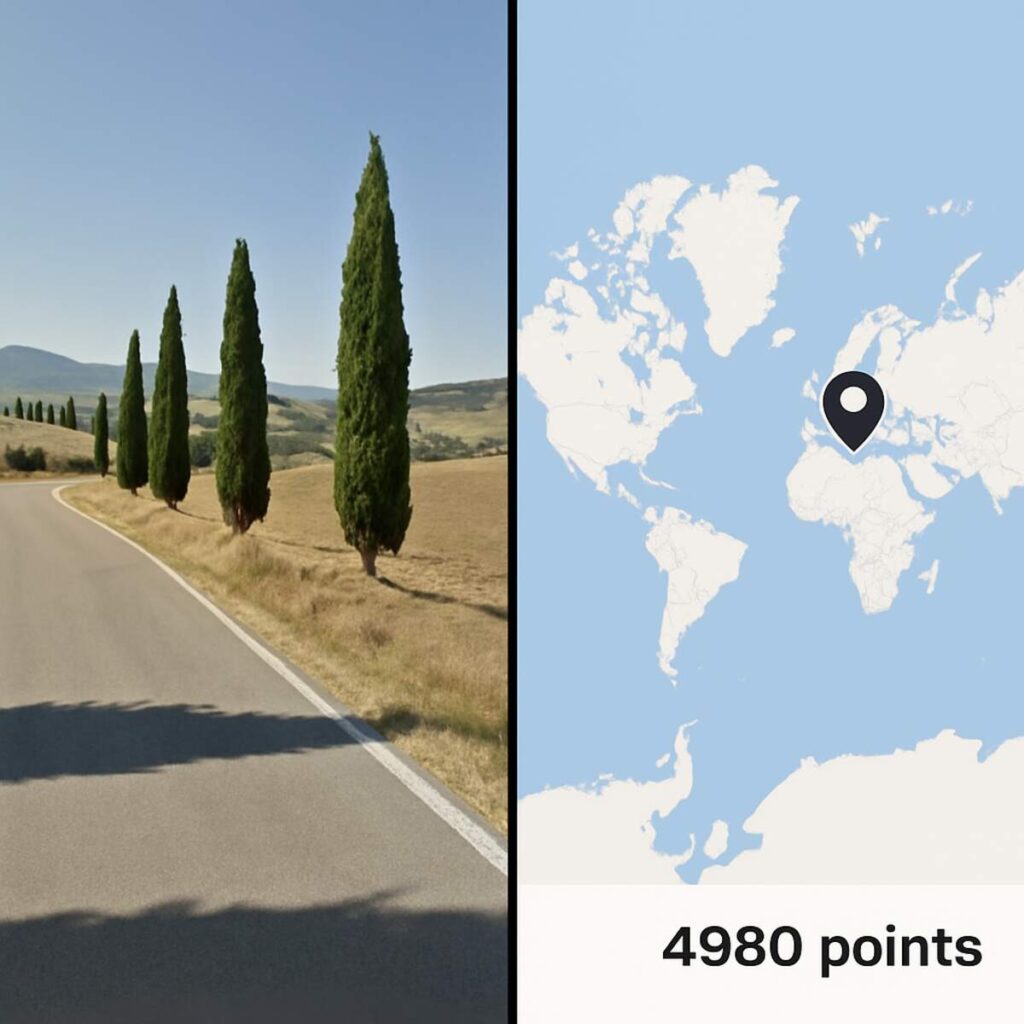
Have you ever dragged the little yellow person in Google Maps and dropped them somewhere random in the world? You look around a dusty road in what might be Australia or a city that could be Brazil and wonder, “Where am I?” Now, what if that was a game? Check out UFA100 to know more
This simple but thrilling idea is the heart of some of the most fun online location games available today. You are placed in a random spot on Earth through Google Maps Street View, and your mission is to pinpoint your location on a world map. The closer your guess, the higher your score.
At first, it feels like pure guesswork. But soon, you start to feel like a digital detective. You learn to spot clues hiding in plain sight—the language on a street sign, the side of the road people are driving on, or even the color of the license plates. Suddenly, you’re not just guessing; you’re investigating.
This captivating puzzle, which you may have seen on social media, is less about knowing every country’s capital and more about the thrill of piecing together the world, one clue at a time.
How a Location Guessing Game Actually Works
Imagine being dropped onto a random road somewhere on Earth with no memory of how you got there. This is the starting point for every round in this popular style of street view location guessing game. You’re placed inside a Google Street View scene and can click around to explore—down bustling city streets, along remote country lanes, or past mysterious storefronts. Your mission is simple: look for anything that might give away your location.
When you think you know where you are—or even just have a vague idea—you open a world map and place a pin on your best guess. The most popular version of this game, called GeoGuessr, then reveals the actual spot and scores you based on proximity. A guess on the right continent might earn you a few hundred points, but nailing the exact country or region can get you close to a perfect 5,000. It’s a simple and addictive loop: explore, guess, and see how close you got.
But how do you go from a wild guess in the middle of an ocean to pinpointing a specific country? The real magic isn’t just about getting a high score; it’s the thrill of the detective work. It’s about that first “aha!” moment when you spot a single, tiny clue that breaks the puzzle wide open. Often, the very first clue you’ll learn to spot is the one hiding in plain sight: the local language.
Your First ‘Aha!’ Moment: Using Language to Pinpoint Your Location
Staring at a foreign street, the first question is always, “Where do I even begin?” Often, the most powerful clue is written on the first sign you see. Learning a few tips for identifying languages from signs is one of the fastest ways to get better at the game, instantly transforming a wild guess into an educated one. You don’t need to be a linguist; you just need to spot a few key differences.
Imagine you’re on a sunny street and spot a storefront with the word “Farmácia.” It looks a lot like “Pharmacy,” but that little accent mark on the ‘a’ is your golden ticket. It tells you the language is likely Portuguese or Spanish. Just like that, you’ve eliminated North America, most of Europe, Asia, and Africa. Your search has narrowed from the entire globe to just a couple of specific regions. This is the detective work in action.
This trick works for more than just familiar-looking alphabets. Once you start looking, you’ll notice that writing systems fall into distinct visual families. If you see signs with blocky, angular letters that include characters like Я, Д, or Ц, you’re almost certainly looking at the Cyrillic alphabet. This is a massive clue that you’re likely in Eastern Europe or Russia. Similarly, the elegant, complex characters of Japanese or the looping curves of Thai are so unique they instantly place you in a specific part of Asia.
Suddenly, a road that seemed completely alien starts to offer up its secrets. By learning to recognize just the style of writing, you can slice the world map into manageable chunks. You’ve gone from feeling lost to having a solid lead, all from a single glance. With this first tool in your belt, you’re ready to start looking for other clues hidden in plain sight.

How to Read the Road: Clues Hidden in Plain Sight
But what happens when you’re dropped on a lonely country road with nothing but trees and asphalt? Language clues are great, but sometimes there are no signs at all. In these moments, the road itself becomes your best source of information. The first and biggest clue is to figure out which side of the road traffic is on. If you see other cars or even just notice that your Google car seems to be in the left-hand lane, you’ve just performed a massive deduction. This simple observation points strongly toward places like the UK, Ireland, Australia, New Zealand, India, or Japan, instantly ruling out the Americas and most of Europe.
This single observation is powerful, but you can get even more specific by looking down at the paint. The color of the lines dividing traffic is one of the most useful tips for identifying countries by photo. While most of the world uses white lines to separate lanes, a solid or dashed yellow line running down the center of the road is a hallmark of the Americas. If you find yourself on a road with a yellow center line, it’s an incredibly strong hint that you’re somewhere in the United States, Canada, or parts of South America.
Beyond the side you drive on, the road is full of subtle hints that distinguish one country from another. Combining these clues is where the real detective work begins. For example, driving on the right with a yellow center line makes a North American location extremely likely. But if you’re driving on the right with only white lines, you could be almost anywhere else in the world. To narrow it down further, we need to look at the smaller details, unlocking a new level of deduction by examining what license plates and roadside posts can tell you.
Unlocking a New Level: What License Plates and Bollards Tell You
While the road itself tells a story, the objects found alongside it offer the next chapter. Even if a license plate is too blurry to read, its color and shape can be a dead giveaway. Think of it as a country’s unique calling card attached to every car. Spotting a specific style can instantly confirm or deny your suspicions about where you are in the world, turning a vague guess into a confident one.
Learning to recognize these plates is easier than you might think, as a few common patterns cover huge areas of the globe. You don’t need to memorize hundreds of designs; just knowing the basics can give you an incredible advantage.
A Quick Guide to Plate Spotting:
- Blue strip on the side: This is your golden ticket. It almost always means you’re in a European Union country.
- Mostly yellow plates: If you see a sea of cars with bright yellow front and back plates, you’re very likely in the Netherlands or Luxembourg.
- Tall, skinny plates: These narrow, vertical plates are a common sight in some South American countries like Brazil and Argentina.
Sometimes, however, you won’t find any cars. What then? This is where you learn to notice the unsung hero of geographical deduction: the humble roadside post. Players call these small, reflective markers “bollards,” and they are surprisingly unique from country to country. One country might use a simple white post with a red reflector, while its neighbor uses a black-and-white striped one. Paying attention to these small details can be the clue that finally solves the puzzle.
By combining road lines, license plates, and now bollards, you’re building a detective’s case piece by piece. But what happens when there are no roads, no cars, and no posts—just you, a dirt track, and the sky? For that, there’s one last, truly clever trick up every expert player’s sleeve.
The Ultimate Detective Trick: Using the Sun to Find Your Hemisphere
This is where you graduate from looking at the ground to reading the sky itself. The sun is the most powerful clue in the game when there’s nothing else around, and using it is the closest you’ll get to feeling like a real-world navigator. This one clever trick can instantly tell you which half of the planet you’re on. It works anywhere, from the Australian outback to the barren steppes of Central Asia.
The secret is surprisingly simple. In the game, find the sun, which usually appears as a bright, washed-out flare in the sky. If the sun is in the southern part of the sky, you are in the Northern Hemisphere (like the USA, Europe, or Japan). If the sun is in the northern part of the sky, you are in the Southern Hemisphere (like Brazil, South Africa, or Australia). It’s a simple quirk of how our planet tilts and travels through space.
With a single glance, you can cut the entire globe in half, turning an impossible guess into a 50/50 shot. This may feel a bit like magic at first, but after a few rounds, checking the sun will become second nature. Armed with these powerful new skills—from reading road lines to using the sun itself—you’re ready to put your knowledge to the test and start racking up some serious points. The only question left is where to play.
Don’t Want to Pay? The Best Free GeoGuessr Alternatives
While GeoGuessr is the most famous name in the world-guessing genre, its free play can be limited to just a few games per day. This can be frustrating when you’re just getting into the rhythm of exploring. Luckily, a whole world of free GeoGuessr alternatives is waiting for you, each offering a slightly different spin on the core idea of deducing your location. You can get hours of practice and fun without ever reaching for your wallet.
For those who love the classic Street View challenge, Geotastic is your best bet. It offers the same core experience of being dropped somewhere random and using clues to find your location on a map. Where it shines for beginners is its generosity with free game modes. You can play endless rounds of country-specific maps or themed challenges, making it a fantastic playground for honing your new detective skills. The core difference between GeoGuessr vs Geotastic often comes down to this free access and a slightly different community feel.
But what if you prefer bustling city streets to lonely country roads? A different kind of free map guessing game online called City Guesser trades static images for video. Instead of clicking down a road, you’ll watch beautiful walking tours, drone footage, or dashcam videos from cities all over the globe. Your job is to guess the city based on the architecture, people, and overall vibe. It’s a more cinematic and relaxed way to play, focusing less on tiny clues and more on the feeling of a place.
So, which free alternative is right for you? It really depends on what you’re in the mood for.
- Geotastic: The best like-for-like free alternative, offering classic Street View gameplay with lots of free modes.
- City Guesser: A video-based game perfect for a more relaxed, visual experience focused on world cities.
- PlayGeography: A simpler, quiz-style game that’s great for drilling basics like flags, capitals, and country shapes.
Trying out these games is fun on your own, but the experience truly comes alive when you share it. In fact, one of the best parts of the geography game community is challenging your friends to see who the real world detective is.
How to Play Geography Games With Your Friends
The thrill of pinpointing a location gets even better when you can prove to your friends that you’re the superior detective. Transforming this solo puzzle into a social event is easy and adds a whole new layer of fun. Most location-guessing games, including GeoGuessr, offer two fantastic ways to play with friends: a fast-paced live competition or a flexible challenge you can complete on your own time. These fun online location games are perfect for a virtual game night or just a casual ongoing contest.
For a more direct competition, you can host a live GeoGuessr multiplayer match, often in a mode called “Battle Royale.” In this format, you and your friends all start a round at the same time. After everyone makes their guess, the player whose pin was furthest from the real spot is knocked out. The game continues with a new location each round, eliminating one player at a time until only the champion remains. It’s a frantic and exciting way to test your skills under pressure.
But what if you can’t get everyone online at once? This is where “Challenge Links” come in. After you play a standard game (usually five rounds), you’re given a unique link. You can send this link to friends, who will then face the exact same five locations you did. They can play whenever they have a free moment, and once they finish, you can all compare scores to see who came out on top. It’s the perfect way to keep a friendly rivalry going across different schedules. Of course, whether you’re playing live or sending challenges, you’ll want to have a few tricks up your sleeve.
Your First 5 Rounds: A Simple Strategy for Not Feeling Lost
When you’re dropped onto a random road with nothing but trees and sky, it’s easy to feel overwhelmed. Before you panic and click a random spot on the map, take a deep breath. The secret to a good guess isn’t about knowing every country’s flag; it’s about having a simple routine to follow. If you’re asking yourself how to get better at GeoGuessr, this mental checklist is your starting point.
For your first few games, try to run through these four steps in order every single time. This process turns a chaotic scene into a set of manageable clues and is the foundation of any good GeoGuessr beginner’s guide.
Your Beginner’s Checklist:
- Look for Language: Find any text on signs, trucks, or buildings.
- Check the Road: Which side are cars driving on? Are the lines yellow or white?
- Scan for Flags or URLs: Look for country flags on buildings or web addresses like ‘.fr’ or ‘.co.uk’ on vans.
- Make an Educated Guess: Use your clues to pick a country and click. Don’t worry about being perfect!
Notice what’s not on that list: getting the exact city, street, or a perfect 5,000-point score. The goal is to move from “I have no idea” to “I think it’s probably Brazil.” This strategy transforms the pressure of competition into the simple joy of discovery, making it a fantastic game to learn geography in a low-stakes way.
With this simple checklist, you’re no longer just guessing—you’re deducing. You now have a repeatable framework that will build your confidence and make every round an exciting puzzle rather than a stressful test. You have the fundamental skills to start your journey.
You’re Officially a Digital Explorer: What’s Next?
Just a few minutes ago, a random roadside was simply a random roadside. Now, it’s a map filled with secrets waiting for you to decipher. You’ve learned to see the world through a detective’s eyes, realizing that clues to your location are hiding in plain sight—in the language on a shop sign, which side of the road cars are on, or even the position of the sun. That seemingly impossible skill of pinpointing a location from a single image is no longer magic; it’s a method you now understand.
This new perspective transforms these fun online location games from a simple test into a thrilling hunt. The goal isn’t about getting a perfect score. It’s about the electrifying “Aha!” moment when you spot your first clue and narrow the entire globe down to a single country. This is more than just a game to learn geography; it’s a celebration of curiosity, where every discovery feels like a personal win.
Your journey as a digital explorer has just begun. The world is no longer just a collection of places but a massive, interactive puzzle. Don’t just read about these world geography trivia games—experience that feeling of discovery for yourself. Open one of the games we mentioned, jump into a free round, and see what your first clue will be. The adventure is waiting.